Pre-School Learning
Easy activities parents can do at home
The NI Pre‑School Curriculum is built around play‑based, holistic learning that supports children’s natural development and curiosity.
Below is a simple, ready‑to‑use sheet you can print or keep on your phone.
1. Personal, social & emotional development
Goal: Build confidence, independence, friendships, and emotional awareness.
Try at home:
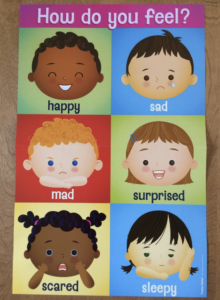
- Feelings Talk: Ask “How are you feeling today?” and let your child choose or draw an emotion face.
- Helping Hands: Give small responsibilities (tidy toys, help set table).
- Play Dates: Encourage sharing and turn‑taking through play.
2. Physical development & movement
Goal: Develop coordination, balance, strength, and fine motor control.
Try at home:
- Gross Motor Play: Jumping, hopping, dancing to music.
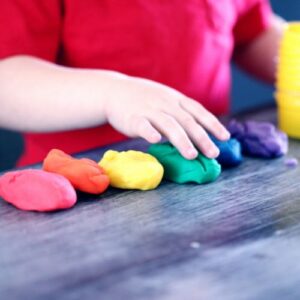
- Fine Motor Fun: Threading beads, using tweezers to pick up pasta, playdough squeezing. Bing Videos
- Outdoor Time: Nature walk, ball‑throwing, climbing safely.
3. Language development
Goal: Build listening, communication, early literacy, and vocabulary skills.
Try at home:
- Story Time: Read daily; talk about pictures and ask “What do you think happens next?”
- Chatty Moments: Describe what you see on walks (“Look! A big red bus!”).
- Name Writing Practice: Encourage drawing and mark‑making—they don’t need perfect letters yet.
4. Early mathematical experiences
Goal: Develop early number, shape, pattern and problem‑solving skills.
Try at home:
- Sorting Games: Sort toys by colour, size, type.
- Counting Everywhere: Count steps, apples, cars driving by.
- Pattern Play: Make simple patterns with blocks or socks (e.g., red‑blue‑red‑blue).
5. The arts
Goal: Encourage creativity, imagination, music, and expressive play.
Try at home:
- Art Station: Crayons, paints, collage materials—focus on creativity, not the end product.
- Music Time: Sing nursery rhymes, clap rhythms, dance freely.
- Imaginative Play: Dress‑up, pretend shops, puppet shows.
6. The world around us
Goal: Develop awareness of the environment, people, nature, and early science concepts.
Try at home:
- Nature Hunt: Look for leaves, insects, clouds—talk about what you notice.
- Water Play: Pouring, measuring, floating/sinking objects.
- Real‑World Involvement: Bake together, plant seeds, explore how things work.
A typical daily learning routine (optional)
Short, natural play-based chunks that fit real family life.
- Free play (20–30 mins)
- Story time (10 mins)
- Outdoor play (20 mins)
- Creative activity (10–15 mins)
- Snack + self-help skills (independence practice)
- Calm time/quiet play (10 mins)
Key principles of the NI pre school curriculum
Parents can keep these in mind during everyday interactions:
- Children learn best through play and hands‑on experiences [ccea.org.uk]
- Learning should be holistic, not rigidly academic at this age [daynurseries.co.uk]
- Focus on what children can do, building confidence and independence [daynurseries.co.uk]
- Adults support learning through interaction, encouragement, and observing interests [daynurseries.co.uk]
Pre-School English
1. Listening & attention
Goal: Help your child listen carefully, follow simple instructions, and tune into sounds.
Try at home:
- Listening Walk: Go outside and listen for birds, cars, wind, dogs. Ask: “What did you hear?”
- Simple Instruction Games: “Touch your toes… now find something red.”
- Sound Matching: Make animal noises; let your child guess the animal.
2. Talking & communication
Goal: Build vocabulary, encourage conversation, and help children express ideas.
Try at home:
- Daily Chat: Talk about everyday life — shopping, cooking, getting dressed.
- Open Questions: “What was your favourite part of today?”, “What do you think will happen next?”
- New Words Game: Introduce words like smooth, bumpy, gigantic during play.
3. Stories, books & early literacy
Goal: Develop an interest in books, storytelling, and understanding print.
Try at home:
- Shared Reading: Read daily. Pause to talk about pictures, characters, feelings.
- Prediction Play: “What do you think happens next?”
- Environmental Print: Point out signs, labels, logos when out and about.
4. Mark making & early writing
Goal: Encourage drawing, scribbling, and early attempts at writing — all important pre‑writing skills.
Try at home:
- Drawing Time: Provide crayons, chalk, paint — let them explore freely.
- Name Play: Write your child’s name and let them trace or cover letters with stickers.
- Writing in Different Materials: Shaving foam, sand, mud, rice trays.
5. Early phonological awareness
Goal: Help children notice sounds in words — the earliest step before phonics.
Try at home:
- Rhyme Time: Sing rhyming songs (Twinkle Twinkle, Humpty Dumpty).
- Silly Rhymes: Make up rhymes together: “cat–hat–zat–brat!”
- Sound Spotting: Play “I spy” using sounds, not letters: “I spy with my little eye something beginning with mmmm”.
6. Imaginative & pretend play
Goal: Build storytelling, vocabulary, and confidence expressing ideas.
Try at home:
- Role Play: Shops, doctors, superheroes, cafés — encourage conversation.
- Puppet Stories: Use teddies to retell favourite stories.
- Story Builder: Start a sentence and let your child finish it:
“Once upon a time there was a tiny dragon who…”
A simple daily english rich routine
- Morning chat: Talk about plans for the day
- Story time: 10 minutes
- Play: Pretend play or small toy storytelling
- Outdoor listening walk: Even 5 minutes
- Mark‑making moment: Drawing or tracing
- Bedtime story: Relaxing language exposure
Pre-School Maths
1. Counting & number awareness
Goal: Help your child recognise small quantities, begin counting, and understand “how many”.
Try at home:
- Count Together: Count steps, apples, cars, toys during tidy-up time.
- Snack Maths: “How many grapes do you have? If you eat one, how many left?”
- Number Hunt: Look for numbers on doors, buses, shops, remote controls.
2. Sorting & matching
Goal: Build early problem‑solving by grouping items based on similarities.
Try at home:
- Laundry Sorting: Sort socks by colour/pattern.
- Toy Sorting: Sort toy animals by size or type.
- Nature Sorting: Leaves, stones, sticks — sort by size, colour, texture.
This supports the curriculum focus on early categorisation and problem‑solving through hands‑on play.
3. Shape & space
Goal: Help children notice shapes, spatial language, and properties of objects.
Try at home:
- Shape Hunt: Find circles, squares, and triangles around the house.
- Building: Use blocks or boxes to build towers — talk about tall, short, under, on top.
Puzzle Play: Jigsaws encourage shape recognition and matching (highlighted in NI pre‑school guidance).
4. Pattern & sequencing
Goal: Support early reasoning by recognising and creating patterns.
Try at home:
- Simple Patterns: Make sock patterns (stripy/plain/stripy/plain), or block patterns.
- Rhythm Patterns: Clap‑clap‑tap, clap‑clap‑tap — ask your child to copy.
- Nature Patterns: Arrange stones/leaves into repeating sequences.
5. Early measurement concepts
Goal: Build awareness of size, weight, capacity, and comparison.
Try at home:
- Water Play: Use containers to explore full/empty/half-full.
- Size Talk: Compare “bigger/smaller”, “heavier/lighter” using toys or groceries.
- Baking Together: Pouring, measuring, and scooping help develop mathematical language.
These kinds of experiences are encouraged in the NI curriculum through real-life, play‑based activities.
6. Problem solving through play
Goal: Encourage thinking skills, decision-making, and perseverance.
Try at home:
- Construction Challenges: “Can you build a bridge for your car?”
- Obstacle Courses: Work out how to get over/under/around objects.
- Everyday Questions: “How can we share these biscuits so we both have the same?”
The NI guidance emphasises ongoing problem‑solving and hands‑on learning opportunities to build reasoning skills.
A simple maths rich daily routine
- Morning: Count steps downstairs
- Playtime: Sorting toys or blocks
- Snack: Share food fairly
- Outdoor Time: Spot shapes and numbers
- Bath Time: Capacity play with cups
- Bedtime: A counting or shape book